Leadership

You are not in this alone

wright brothers dreamsWhat do you want to do in school, work, or your life? What is your dream? I hope it is so big that you have no idea at this moment how you can ever accomplish it. The good news is you are not in this alone.

Orville and Wilbur Wright dreamed of human flight from the time they were boys. They didn’t know exactly how it could be achieved, but they were determined that they could do it – but not alone.

In 1899, Wilbur Wright wrote a letter to the Smithsonian Institute. He explained how he had studied the work of early aeronautical scientists and asked for all papers that the Smithsonian had published on human flight, and a list of all other works in print. Wilbur and Orville studied all the scientific books that they received, as well as one book titled Empire of the Air, by Louis Pierre Moullard which discussed the possibility of achieving human flight by studying the birds in flight.

Wilbur then began communicating with and questioning the most well-known aeronautical engineers of the time including Octave Chanute, who gave the brothers the idea to perform their experiments on the coasts of the Carolinas (where their famous Kitty Hawk flight took place).

Using the knowledge they received, their ingenuity and talents, along with the help of mechanics, carpenters and land owners, the Wright Brothers decided that human flight would come only from the combination of the right machinery (as observed from the scientists) and skill in operating the machinery (as observed from bird watching). The rest is history.

What do you want to do in school, work, or your life? I hope it is so big that you have no idea at this moment how you can ever accomplish it just like the Wright Brothers dreamed of human flight. Remember, you are not in this alone.

Recruit others into your dreams.

Wilbur Wright had Orville Wright as they built the first manned airplane. Steve Wozniak had Steve Jobs as they built the first Apple computer. Ben had Jerry as they founded the ice-cream empire. Each of these partners had the same dream but different strengths and roles in the ultimate success. Surround yourself with others who can help keep the passion for the dream alive.

“It takes teamwork to make the dream work.”

Research the existing facts of success and failure.

Learn from what others have done that is the same or similar to what you are trying to do. Their success or failure will help you determine what to do or not to do. Just like Wilbur Wright read all he could about human flight and saw the limitations of current airplane designs, Steve Wozniak read all the research he could find on the growing field of personal computers as he built the first Apple Computer. Remember your goal is to deliver on your dream, one that is bigger than you know how to deliver on your own.

“If we knew what it was we were doing, it would not be called research, would it?” – Albert Einstein

Reach out to those that have been on the same path before.

Reading all the research that has been compiled and studying all the success and failures is very important and an integral step in the process of achieving your dreams. But nothing compares with talking with and working side by side those who have been on the same path that you are now on. The Wright Brothers, especially Wilbur, spent significant time with others who had and were pursuing the dream of human flight across several countries.

Find mentors who are willing to invest time to help you accomplish your dream just as they did. You will find that those who have a passion for their dreams, usually have the same passion to help others achieve their dreams.

“A single conversation across the table with a wise man is better than ten years of mere study of books.” – Henry Wadsworth Longfellow

The proof is in the results

ResultsEverything has a bottom line that shows the results. In accounting this is where the sum of all the debits and credits are called the net profit. It is the difference between what you achieved and what it cost you to achieve it.

You may be in a business selling computers, or a nonprofit providing assistance to the homeless, or coaching a college football team. It doesn’t matter what you are trying to accomplish, leaders are in it to win it and there are measurable results. As you win it, leaders provide the opportunity for their team members to learn, develop their strengths, and grow into greater roles. These too have measurable results.

I have a philosophy that if you accomplish both of these results leaders will be more successful, I like to say, “Don’t use people to complete projects, use projects to complete people.” You can get both of these right.

Peter Drucker, the founder of modern management, said, “Effective leadership is not about making speeches or being liked; leadership is defined by results not attributes.” This doesn’t mean you don’t make speeches or worked to be liked, it means you make speeches to encourage and celebrate results, and are liked because of the results your leadership brings.

Here are the three ways to set yourself up to achieve positive results:

Set big goals

“Big results require big ambitions.” – Heraclitus, Greek Philosopher circa 500 BC

If you want to make a difference in the world and in the lives of as many people as you can, then go big. Don’t settle for what is easy, challenge yourself and your team to be the best at whatever you do over the long-term.

Set short steps

“You don’t get results by focusing on results. You get results by focusing on the actions that produce results.” – Mike Hawkins, author, speaker and consultant on coaching leaders to lead as coaches.

Now that you have set big long-term goals, you will only get there by taking definite short-term steps. Everything you plan to do must lead you and your team closer to the end. Never get discouraged, just keep moving forward, adjusting your plan as needed.

Set clear expectations

“Don’t tell me how busy you are. Show me what you’ve gotten done. Words don’t matter. Results do.” – Larry Winget, Author of six NYT bestselling books on personal development.

Even short-term steps require the measuring of results. Don’t confuse activity with accomplishment. Make even the smallest step worth something. Give it your all.


____________________________________________________________________________________________

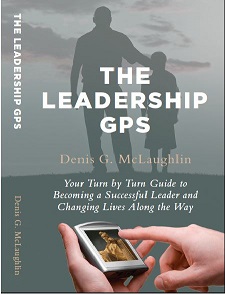
I am speaking at the Project Management Institute in Chicago later this week.  I will be discussing Leadership in Project Management using the strategies outlined in my best selling book The Leadership GPS – Your Turn by Turn Guide to Becoming a Successful Leader and Changing Lives Long the Way.

In honor of my appearance at the PMI, I am offering copies of my book at reduced prices for a limited time. Regularly priced at $19.99, the print version is selling for only $7.00.  And regularly priced at $9.99 the Kindle version is selling for only $3.50.

Please click on the links below to be taken to Amazon to purchase copies of The Leadership GPS.

The Leadership GPS Book on AmazonThe Leadership GPS – Print

The Leadership GPS – Kindle

The Delegator

Team with his leaderMalcolm Forbes, the former publisher of Forbes magazine, had a saying that might sound like he was joking, but there was much truth in it, “When in doubt, route.” Here is how he described what he meant, “If you don’t know what to do with many of the papers piled on your desk, stick a dozen colleagues’ names on them and pass them along.”

This is a real life example of what Stephen Covey said about the importance of delegation, Organizations don’t grow much without delegation…because they are confined to the capacities of the boss.” You see, successful leaders have to be Delegators – you don’t know how to do everything, and even if you did you don’t have the time.

But, there is a misperception of how successful delegation works. Some people think that if you are a delegator you are giving away the responsibility to achieve success. This is not the way it works. A Delegator does not give away and go away, they are here to stay, but in a different way. Here are the three steps of a Delegator.

The three steps of a Delegator:

Establish the vision

Even though you are delegating much of what you do, one thing that you can’t delegate is establishing the vision for the team – this one is 100 percent yours. You decide and describe where the team is going and what success looks like.

Eli Broad founded two Fortune 500 companies in different industries (KB Homes and SunAmerica). When running KB homes, Broad signed off on every decision about the land they would build homes on, “I made sure always to know where we were buying, what the market was like there, and what the lot would do for us.”

Broad didn’t exert that type of control on everything, “Once you’ve identified your crucial tasks and sorted out your priorities, try to find a way to delegate everything else.” He went on to say, “The trick to delegating is to make sure your employees share your priorities.” This is the key to establishing the vision.

Agree to the strategy

Now you should be ready to share control. This is the big picture of how the vision will be accomplished. Here the delegator works with the team to develop the strategy, ensuring it aligns with the vision. This step is 50/50 between the delegator and the team. Open dialogue, and differing opinions are heard to come to the right answer.

Leaders don’t need to have every answer, but they do need to find every answer. That is the shared part.

John Maxwell is an international bestselling author on Leadership and he also founded and leads several companies (Equip, Maximum Impact, and The John Maxwell Team).

John says that delegating the big picture strategy is important because it allows him to do what is important to him. He recognizes the other end to this delegation, “Assignments are not always done ‘my way’. But I have discovered that most things can be accomplished effectively in many ways.”

Activate the plan

Now you are ready for the strategy to be accomplished using the strengths and talents of each person on the team. These are the short term actions that if successful will lead to accomplishing the vision.

Here is where some Delegators incorrectly give up all control and hope that success will come. The real success comes when you understand that you will accomplish what you inspect, not what you expect. While you should let your team make 100 percent of the day to day decisions, you have to stay connected to see that everything is heading in the right direction.

Wayne Huizenga, the founder of AutoNation, Waste Management, and Blockbuster described his role as a delegator like this, “I give authority, but I stay in touch. Otherwise it doesn’t work.”

Manage through stability, lead through change

Change leadershipWhen nothing is changing, you manage. When change comes along, you lead. Here’s the punch line: Things are always changing.

“Isn’t it funny how day by day nothing changes but when you look back everything is different…”– C.S. Lewis

Borders Booksellers overinvested in managing their store locations but underinvested in online capability and ended in bankruptcy.

PayPal saw the future and led the company from its beginnings in cryptography, then transmitting money via PDAs, and after a few more years became the successful online payment system we know today.

How do you lead through change?

Envision the future

When I travel in new cities I always use my GPS to drive. Not just for the obvious reason of not knowing where I am going, but also to plan ahead for the changes. The GPS lists the next few turns so I know which lane to switch to and how much time I have to get there.

I use this same method to prepare my team for the future. We all talk about our destination and the next few changes that are coming up so that we are always prepared for what’s next.

“Change is the law of life. And those who look only to the past or present are certain to miss the future.” – John F. Kennedy

Engage those that are ready

Change only happens when people are ready for change to happen. Don’t give up if everyone is not ready for the change. Start with those that are ready and show the results of change, then others will follow.

“Progress is impossible without change, and those who cannot change their minds cannot change anything.” George Bernard Shaw

Energize the process

The process of change is not one and done but a series of next steps. You need to build a process where the outcome is change. Don’t let change surprise you. Be a team whose core competency is change leadership. Have a plan that you execute every time.

“To improve is to change; to be perfect is to change often.” ­– Winston Churchill


Believe you can succeed

believeIf you don’t believe you can, you will look for evidence that you aren’t. If you do believe you can, you will look for opportunities so you will.

Read on for the stories of three people who faced significant challenges in life but believed they could succeed – and did.

Theodore Roosevelt

“Believe you can and you’re halfway there.”

From an early age Theodore Roosevelt suffered from severe bronchial asthma that would wake him in the night panicking as he gasped for breath. These attacks lasted well into his childhood and along with other illnesses left him thin and small for his age. At the encouragement of his father he began the process of exercising and weight lifting to transform himself into a muscular man unafraid of any challenge.

Theodore Roosevelt was the 26th President of the United States. His political career took him from a New York State Assemblyman, to the Assistant Secretary of the Navy to the Governor of New York to the Vice Presidency before becoming the 26th President.

Gail Devers

“Keep your dreams alive. Understand to achieve anything requires faith and belief in yourself, vision, hard work, determination, and dedication. Remember all things are possible for those who believe.”

Gail Devers was diagnosed with Graves’ disease early in her running career. The treatment caused her feet to swell and form blisters to the point where she could no longer walk and had to be carried or crawl. Her doctor considered amputating her feet. She was determined to run again and after the treatment ended she returned to training.

Gail Devers went on to win three Olympic Gold Medals in running. She also won fifteen other gold and silver medals in world running championships.

Marie Curie

“Life is not easy, for any of us. But what of that? We must have perseverance and above all confidence in ourselves. We must believe that we are gifted for something and that this thing must be attained.”

Marie Curie’s family lost their property and fortunes in late 1800’s political struggles in Poland. The left her and her siblings without the financial wherewithal to pursue higher education without significant effort. After working as a governess and tutor for five years to pay for her sister’s education, Curie was able to attend the University of Paris and obtain her degree in Physics by studying during the day and tutoring at night often eating nothing more than buttered bread and tea due to a lack of finances.

Marie Curie became the first woman to win a Nobel Prize, and the only person to win twice in multiple sciences – both Physics and Chemistry.

Vision – Strategy – Implementation

vision strategy implementationGreat success is only accomplished when we first establish a picture of what success looks like when we are done. Vision is the “what” of success that is described to get buy in.

A great vision can only be fulfilled if you have a plan to reach it. Strategy is the “how” of success that is designed to be executed.

Describing success through a vision, and designing a plan to reach it through a strategy brings nothing unless you actually do what you designed, to achieve what you described. Implementation is the “who” and “when” of success.

In a recent speech, Alan Mulally, the former CEO of Boeing and Ford said, “The thing I’ve found over the years…is the absolute importance of three universal principles: a compelling vision, a comprehensive strategy, and a relentless implementation process to deliver that strategy and vision,”

Describe it – Vision

Success doesn’t happen overnight. As we move through the days, weeks, and months of activity we all need something to remind us why we are doing what we do. Vision is a motivator. When we hit the wall it gives us strength to keep going. Vision is a beacon. When the path we are on is blocked it provides direction to get back on track.

“If you are working on something exciting that you really care about, you don’t have to be pushed, the vision pulls you.”– Steve Jobs

Design it – Strategy

You know where you are and you described where you want to go. Now you need to decide how you are going to get there. Projects are complicated and require many steps in the right order to succeed. Strategy is an organizer. When we need to put the puzzle pieces together, it shows us how they all fit. Strategy is a balancer. When we have multiple priorities, it provides guidance on which to choose.

“Without strategy, execution is aimless.” – Morris Chang, the founding Chairman of Taiwan Semiconductor Manufacturing Company, known as the father of Taiwan’s chip industry.

Do it – Implementation

The difference between what you are and what you want to be is what you do. No lumberjack ever talked a tree into falling down. Implementation is an energizer. The first step is always the hardest but once started the next steps come easier. Implementation is a celebrator. Once you have made some steps forward you can look back and see how far you have come.

“Organizations are successful because of good implementation, not good business plans.” – Guy Kawasaki, Silicon Valley marketing executive and bestselling author.

Seating Chart Leadership

classroom seating chartIn school classes each teacher has a seating chart. These are first set up alphabetically to help the teacher learn each student’s name. As the year progresses, students may move to seats that better suit their particular needs. Some students do their best in the front of the room as they see the board better, others move closer to their friends because they learn best in social settings. No matter the system used to place students on the seating chart, it is all done to help them achieve the best possible outcome.

Successfully leading a team also requires a seating chart. Like the school classroom example, this seating chart needs to adapt over time to help your team achieve success. In his book Good to Great Jim Collins talks about great companies as a bus. The bus drivers are the leaders and their main job is to get the right people in the right seats on the bus so they can arrive at the right destination.

Here are three ways leaders can use the seating chart to help their team achieve the best possible outcomes:

Help your team align to their talents

The best performing teams recognize the diverse talents of each individual, make sure they are in the right seats, and fit them together to achieve a common purpose. According to Gallup, “The best opportunity for people to grow and develop is to identify the ways in which they most naturally think, feel, and behave, and then build on those talents to create strengths.”

People want to be personally successful and on a successful team. Unless we all operate in our strength zone, we will be less successful than we could be. Aligning people with their talents is a sure way to give them the best shot at being all the can be.

Help your team aspire to be great

Being in the right seat and excelling in the right seat are two different things. People may be naturally gifted with talent, but it takes work to become great. Reaching greatness requires diligently practicing to hone your strengths. Inspirational author H. Jackson Brown, Jr. says it this way, “Talent without discipline is like an octopus on roller skates. There’s plenty of movement, but you never know if it’s going to be forward, backwards, or sideways.”

There are many self-motivated people who may challenge themselves each day, but sometimes it is easier for others to see what we can become. The leader’s role here is to challenge your team to succeed today beyond yesterday and tomorrow beyond today. Ralph Waldo Emerson put it like this, “Our chief want is someone who will inspire us to be what we know we could be.”

Help your team help others

Achieving personal greatness by being in the right seat and becoming your personal best is a great accomplishment worth celebrating and emulating. The ultimate in success is never just our own personal achievements. The real accomplishment is always in helping others learn from our actions and succeed even beyond our results.

For those driven to success, the steps from personal to team success and from team success to other’s success are mere extensions of the same desire to be the best. Those who want to be the best will be searching for the next step. Zig Ziglar highlights this search when he says, “There is a certain amount of dissatisfaction that goes with knowing that your time, talent and abilities are not being properly used.”

Your role as the leader is to now change the seating chart once again so that the best individuals can become the best leaders.   As Ronald Reagan said, “The greatest leader is not necessarily the one who does the greatest things. He is the one that gets people to do the greatest things.”

All in good timing

timing is everythingKnowing what you want to do is important, but understanding the right timing of when to do what you want to do matters if you want to be successful.

Anna Wintour, editor of Vogue Magazine shared her thoughts on timing, “It’s always about timing. If it’s too soon, no one understands. If it’s too late, everyone’s forgotten.”

When the timing is right, success flows easily. Well known baseball player and manager for the NY Yankees, Yogi Berra, use to say, “You don’t have to swing hard to hit a home run. If you got the timing, it’ll go.”

Here are some thoughts on the timing of success:

Somethings you should do now.

Take short steps that build a lasting foundation on your way to long-term success. Don’t just go for short-term success alone.

Apolo Ohno, an American Short Track Speed Skater, became the youngest U.S. national champion in 1997 and was the reigning champion from 2001–2009, winning the title a total of 12 times. He is an eight time Olympic medal winner, and a twenty-one time World Championship medal winner.

Ohno discussed the competing desires to win and the steps you must take to be a winner, “We all naturally want to become successful…we also want to take shortcuts. And it’s easy to do so, but you can never take away the effort of hard work and discipline and sacrifice.”

Somethings you should do later

Sometimes you have to wait for the world to catch up to your ideas. Is your team, company, or industry ready for your revolutionary new process? If not, maybe you should invest more time in laying the groundwork of acceptance before you launch.

Joshua Chamberlain was best known for his heroism as a Union General at Gettysburg in the Civil War. He went on to be a professor of languages, speaking ten fluently, and the Governor of Maine – successful in his endeavors. One lessor known fact was his investments in Florida real estate in the late 1880’s. At the time, railroads were being built to bring tourists to the state, but not to the area he and other investors chose, Ocala. After several years they secured a railroad stop nearby, but the development didn’t generate successful returns until the mid-1900’s, many years after Chamberlain exited the investment.

Scott Adams of Dilbert Cartoon fame, put his thoughts on timing this way, “Your best work involves timing. If someone wrote the best hip hop song of all time in the Middle Ages, he had bad timing.”

Somethings you should never do

Never give up your dreams. A person’s dreams are the vision of what they can become.

Lyman Frank Baum is best known for his hugely successful book and the subsequent movie The Wonderful Wizard of Oz. Raised in a wealthy family, Baum was known as a day-dreamer. After failing as the owner of a theatre due to a fire, he moved to South Dakota where he opened a general store that ended in bankruptcy. Baum then started a newspaper which also went out of business.

It was not until he moved to the Chicago area and published his first children’s book that he found the success that he had dreamed of. In 1900 Baum published The Wonderful Wizard of Oz which became the 1939 movie classic. Many remember the line penned by Baum from the famous song sung by Judy Garland, “Somewhere over the rainbow, skies are blue, and the dreams that you dare to dream really do come true.”

Leaders Lead First

EM Kelly lets goGreat leaders like to come in first – they want to win. Not just for their personal benefit, but for their company, team and each employee.

For great leaders to win, they do need to be first and most importantly they need to lead first.

Here are a few areas where great leaders always lead first:

Descend from the Ivory Tower

We frequently hear about famous people making personal visits with their fans. After those visits, someone invariably says, “They were so down to earth.” Why is that a compliment? Because the fans feel connected to their favorite singer, sports star, or actor when they see them acting like a regular person.

This is the same with leaders. People expect leaders to lead from the top of the mountain, but understand the impact at the bottom of the mountain. They want to feel connected to the person who plays a large part in their chances for success. People don’t want to hear “Go,” as E.M. Kelly said, people want to hear the leader say “Let’s Go!”

Leaders lead first by taking the initiative to invest time being with their teams.

Demonstrate what is right

Steve Jobs once said, “A leader leads by example, whether he intends to or not.”  Your team is watching and listening to everything you do – make it count.

If there is a fast approaching deadline and the team needs to work some extra hours to finish – great leaders will be there with them. If there is new process put in place that each employee needs to follow – great leaders follow it.

Don’t just tell people what you want them to do, show them. As Henry David Thoreau said,  “People will believe what they see. Let them see it.”

Leaders lead first by taking the initiative to lead by example.

Delegate implementation

A leader sets vision, goals, and timelines and lets employees decide how to achieve. No one wants to be told what to do every step of the way. Remember, if you always tell your employees how to do everything, you will have to always tell them how to do everything.

President Theodore Roosevelt said, “The best executives are the ones who have sense enough to pick good people to do what they want done, and self-restraint to keep from meddling with them while they do it.”

Leaders lead first by taking the initiative to let their team take the initiative.

What is the measure of a leader?

measure of a leaderThe only true measure of a leader is in the followers.

John Maxwell once asked, “If you’re all alone as a leader, are you really leading?” He went on to say, “If you think you are leading and no one is following, you are only taking a walk.”

With all due respect to social media (I use it myself), but the measure of a leader is not just in the number of followers; it is in the success of followers.

Why do followers follow leaders? In the short run it could just be the latest fad – everyone else is…or it could be that they are looking for something big. In the long run, if you see a leader with committed followers it’s because they are successfully fulfilling these three needs of every follower:

Strategy – Opportunity – Priority

Strategy. Everyone wants to be a success in their life. Each of us wants personal success along with all that we are involved in to be successful. We want the team to win, and we want to be a winning part of that team. The first measure of a leader is their ability to devise a strategy for that to happen for every member of the team.

According to Tom Rath, author of six NYT and WSJ bestsellers on the role of human behavior in business, health, and well-being, “Followers need to see how things will get better and what that future might look like.”

Opportunity. Each person is gifted with abilities unique to them. The key to individual and team success is to use the abilities of each person. The second measure of a leader is how well they connect their followers to opportunities that use their strengths.

Sochiro Honda, the founder of Honda Motors, talked about a Japanese proverb that says, “Raise the sail with your stronger hand,” and explained that it meant, “You must go after the opportunities that arise in life that you are best equipped to do.”

Priority. There are always more ideas and projects than any team can accomplish in limited time with limited resources – and do them well. Prioritization is a requirement of winning people and teams. The third measure of a leader is do they give their followers permission to not do some things so they can do great things.

Bestselling author and expert on high performance human achievement, Denis Waitley, says this about prioritizing, “Don’t be a time manager, be a priority manager. Cut your major goals into bite-sized pieces. Each small priority or requirement on the way to the ultimate goal becomes a mini goal in itself.”

1 7 8 9 10 11 28  Scroll to top